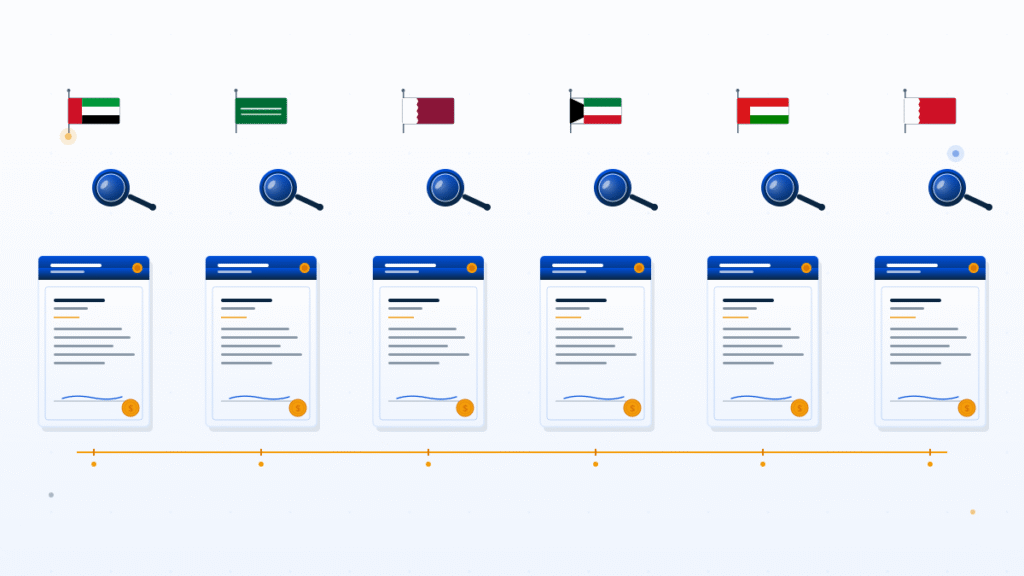

End of service gratuity GCC rules are the most misunderstood line item in Gulf payroll. Every CFO knows end-of-service gratuity is a thing. Most underestimate what it actually costs, or get the calculation wrong when the employee leaves.
The reasons sit hidden in plain sight. Each GCC country uses a different formula. Some use basic salary, some use a wider base. Some pay full gratuity whether you resign or get fired, some cut it down on resignation. Bahrain switched from a lump-sum model to monthly SIO contributions in 2024. Oman is layering a Social Protection Fund compulsory savings scheme on top of the existing gratuity framework, with phased rollout dates running through 2028.
This guide walks through what you actually owe each employee when they leave a Gulf job, country by country, with the rules current to 2026. Everything in the country sections is verified against the operational data we use at Masdar EOR for clients across all six GCC countries — through six locally-registered entities, one per country.
Quick note before we start. When we say “GCC” here, we mean the Gulf Cooperation Council — Saudi Arabia, the UAE, Qatar, Kuwait, Oman, and Bahrain. Not Global Capability Centers.
💼 Want us to handle gratuity accruals and payouts for your Gulf team? Masdar EOR holds direct labour licences in all six GCC countries and accrues EOSB monthly. Get a same-week quote →
What End of Service Gratuity GCC Actually Means
To start, end-of-service gratuity — also called end-of-service benefit, EOSB, or just “gratuity” — is a statutory lump-sum payment that Gulf employers owe employees when their employment ends. Essentially, think of it as a long-service bonus baked into every Gulf labour contract, except it isn’t optional. First, the basic logic is the same across all six countries. Generally, the longer the employee works for you, the more they get when they leave. In other words, the size of the payout scales with tenure, and the formula uses some version of “days of pay per year of service.” However, after that, the similarities break down fast.
Where the Rules Differ Across the GCC
- The salary base differs. UAE uses basic salary only. Saudi includes basic plus fixed allowances. Kuwait uses gross salary including allowances. Bahrain’s new SIO scheme uses basic plus social allowance only. Some employers misread this and underaccrue.
- The accrual rate differs. UAE starts at 21 days per year, rises to 30 after five years. Oman (post and pre RD 53/2023) starts at 15 days for the first three years, then steps up to 30 days from year four. Bahrain is now a monthly SIO contribution rather than a one-off payment.
- The trigger rules differ. UAE pays full gratuity whether you resign or get fired — even in cases of gross misconduct under Article 44. Saudi pays only one-third on resignation under five years. Kuwait pays nothing on resignation under three years.
- The payout mechanism differs. For instance, most countries still pay a lump sum on exit. Bahrain switched to monthly employer contributions paid to the Social Insurance Organization in March 2024.
As a result, this is why employers running multi-country teams almost always overpay or underpay somewhere. Getting end of service gratuity GCC calculations right means treating each of the six countries on its own terms — the rules don’t transfer.
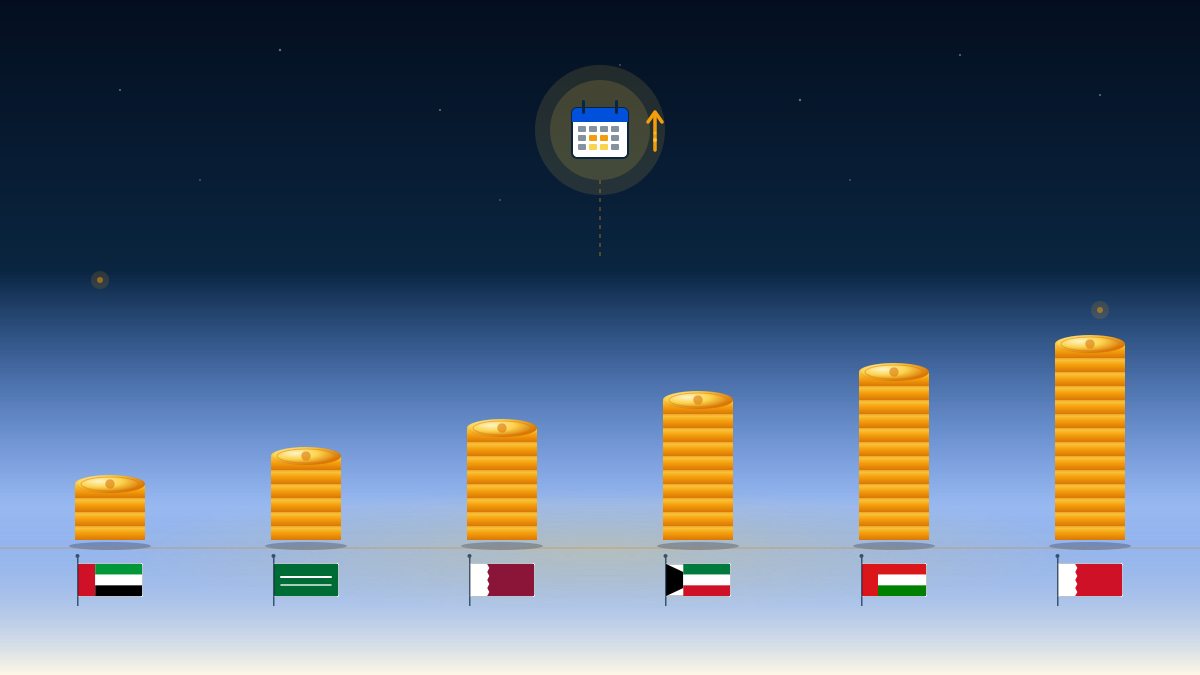
End of Service Gratuity GCC at a Glance
Here’s the quick end of service gratuity GCC reference across all six countries:
| Country | Salary base | Accrual rate | Resignation vs Termination | Notes |
|---|---|---|---|---|
| UAE | Basic salary only | 21 days/yr (yrs 1–5), 30 days/yr (yrs 6+), capped at 2 years’ basic salary | Same treatment for both, including Article 44 dismissal | Federal Decree-Law No. 33 of 2021 |
| Saudi Arabia | Basic + fixed allowances | 0.5 month/yr (yrs 1–5), 1 month/yr (yrs 6+) — cumulative tiered | Tiered on resignation: nothing under 2yrs, 1/3 (2–5yrs), 2/3 (5–10yrs), full (10+yrs) | Articles 84 & 85, Saudi Labor Law |
| Qatar | Basic salary | 21 days/yr minimum, no cap | Same treatment for both (except Article 61 misconduct) | After 1 year of service |
| Kuwait | Gross salary (basic + allowances) | 15 days/yr (yrs 1–5), 30 days/yr (yrs 6+) | Tiered on resignation: nothing under 3yrs, 1/2 (3–5yrs), 2/3 (5–10yrs), full (10+yrs) — Article 53 | Kuwait Labor Law No. 6 of 2010 |
| Oman | Basic salary | 15 days/yr (yrs 1–3), 30 days/yr (yr 4+) — applies to both legacy and post-RD 53/2023 service | Same treatment for both | Article 61, Royal Decree 53/2023 |
| Bahrain | Basic + social allowance only | Employer pays SIO monthly: 4.2% (yrs 1–3), 8.4% (yr 4+) — concurrent tiered | SIO pays the employee — employer’s obligation ends | Edict 109 of 2023 |
End of Service Gratuity GCC: How It Actually Works Country-by-Country in 2026

🇦🇪 United Arab Emirates
To begin with, the UAE runs the simplest EOSB system in the Gulf. One unified formula. One salary base. No resignation penalty. And as of Federal Decree-Law No. 33 of 2021, no forfeiture even for gross misconduct.
- Legal basis: Federal Decree-Law No. 33 of 2021
- Salary base: Last drawn basic salary. The formula excludes allowances, overtime, and commissions
- Accrual:
- Under 1 year of service: nothing
- 1–5 years: 21 days of basic salary per year
- 5+ years: 30 days of basic salary per year for the years beyond five
- Total cap: 2 years of basic salary
- Resignation vs termination: No difference since February 2022
- Gross misconduct: Even when an employee is summarily dismissed under Article 44, the employer must still pay the full accrued end-of-service gratuity. UAE law has abolished the pre-2022 rules that allowed gratuity forfeiture. The employer can still terminate without notice, but they cannot withhold the gratuity already earned
Additionally, even though the formula is simple, the salary base trips up a lot of employers. Many split monthly compensation as 60% basic / 40% allowances to reduce EOSB exposure. That’s legal in the UAE — but it means employees with high gross compensation can have surprisingly low gratuity payouts. For more, see our UAE Labor Law 2026 guide, or read more about UAE labour law on the official UAE Government portal.
🇸🇦 Saudi Arabia
By contrast, Saudi has the most complex EOSB rules in the Gulf. The calculation is cumulative tiered. The salary base includes more than just basic. And the resignation rules are unusual.
- Legal basis: Articles 84 and 85 of the Saudi Labor Law (Royal Decree No. M/51)
- Salary base: “Actual wage” — basic salary plus fixed allowances that form part of regular remuneration. The formula excludes variable allowances and bonuses
- Accrual on termination by employer (Article 84):
- Under 1 year: pro-rata gratuity for fractions of the year served
- 1–5 years: half-month salary per year
- 5+ years: full month salary per year for years beyond five
- The calculation is cumulative — a 7-year employee gets 2.5 months (years 1–5) + 2 months (years 6–7) = 4.5 months
- Accrual on resignation (Article 85):
- Under 2 years: nothing
- 2–5 years: one-third of the calculated gratuity
- 5–10 years: two-thirds
- 10+ years: full gratuity
- Special cases: Female workers get full accrued gratuity if they terminate within 6 months of marriage or 3 months after giving birth
- Exception: No gratuity if termination is under Article 80 gross misconduct
Notably, the cumulative tiered structure is what most online calculators get wrong. An employee terminated after exactly 5 years gets 2.5 months. An employee terminated after 6 years gets 2.5 + 1 = 3.5 months, not 6 months full. Also see our Saudi employment contracts guide.
🇶🇦 Qatar
Qatar runs a clean, single-formula system. Same calculation regardless of how the contract ends.
- Legal basis: Qatar Labor Law (Law No. 14 of 2004)
- Salary base: Last drawn basic salary
- Accrual: Minimum 21 days of basic salary per year of service, after 1 year of service
- No statutory cap, though contracts can negotiate caps above the statutory floor
- Resignation vs termination: Same treatment for both, except Article 61 misconduct dismissal which forfeits gratuity
In short, Qatar’s rule is the cleanest of the six. If your employee gives notice, retires, gets terminated for redundancy, or just walks away, the calculation doesn’t change. Just basic salary times 21 days times years of service. One thing to watch: if an expat exits Qatar without serving notice and without cancelling their QID, they’re blocked from a new work visa for 6 months. The gratuity entitlement remains, but the practical mechanics of collecting it get complicated.
💼 Worried about getting EOSB right across multiple countries? Masdar EOR accrues gratuity monthly for every client. Book a 20-minute call →
🇰🇼 Kuwait
Meanwhile, Kuwait has the most generous EOSB system in the GCC for one reason — it uses gross salary, not basic. That means allowances, housing, and transport all factor into the calculation. But the resignation rules under Article 53 cut the payout down significantly if the employee leaves voluntarily.
- Legal basis: Kuwait Labor Law No. 6 of 2010
- Salary base: Gross salary (basic + allowances) — also known as the “last remuneration received”
- Accrual:
- Year 1 through year 5: 15 days of wages per year
- Year 6 onwards: 30 days of wages per year (one full month)
- Unpaid leave doesn’t count toward the service period
- Resignation tiered scale (Article 53, unlimited contracts):
- Under 3 years: 0% — nothing
- 3–5 years: 50% — half
- 5–10 years: 66.67% — two-thirds
- 10+ years: 100% — full
Worked example. An employee earning KWD 1,000 basic + KWD 500 in allowances = KWD 1,500 gross. After 7 years of service, the calculated baseline gratuity is KWD 750 × 5 years (first 5 years at 15 days) + KWD 1,500 × 2 years (years 6 and 7 at one full month) = KWD 6,750.
If the employer terminates this employee, they receive the full KWD 6,750. But if the same employee resigns voluntarily after 7 years, Article 53 kicks in — they’re entitled to only two-thirds of the calculated baseline. That makes the actual legal payout KWD 4,500, not KWD 6,750.
Ultimately, this is the trap, because many employers accrue the full baseline on their books and are surprised when the actual resignation payout comes in lower (good for cash) — or when an employer-termination payout comes in higher than they expected (bad for cash). For more, see our Kuwait Labour Law overview.
🇴🇲 Oman
Furthermore, Oman went through the biggest legal reset of any GCC country in 2023. Royal Decree 53/2023 took effect 31 July 2023, replacing the old labour law. But despite the broader reforms, the EOSB accrual structure itself remained tiered — not flat.
- Legal basis: Royal Decree 53/2023 (Article 61)
- Salary base: Last drawn basic salary
- Accrual structure (post-RD 53/2023):
- Years 1–3: 15 days of basic salary per year
- Year 4 onwards: 30 days (one full month) of basic salary per year
- Accrual structure (legacy — service before 31 July 2023):
- Years 1–3: 15 days of basic salary per year
- Year 4 onwards: 30 days of basic salary per year
- The structure is the same before and after the reform — what changed was the rest of the labour law (working hours, sick leave, maternity, etc.), not the EOSB accrual rate
- Resignation vs termination: Same treatment for both
- Exception: No gratuity for Article 40 gross misconduct dismissal
Meanwhile, there’s another change worth watching. Royal Decree 52/2023 created the Social Protection Fund (SPF), which is layering a compulsory savings scheme on top of the existing gratuity framework. The expat compulsory savings scheme (9% employee contribution expected) was originally scheduled to start in 2026, but Royal Decree 60/2025 postponed it to 19 July 2027. Other phases (sick leave, work injuries) also got pushed out. Once the SPF compulsory savings system rolls out fully, the relationship between EOSB and the new fund will shift — but as of 2026, the traditional EOSB framework remains the default.
🇧🇭 Bahrain
Finally, Bahrain is the outlier. From March 1, 2024, EOSB for expats is no longer paid as a lump sum by the employer when employment ends. Instead, the employer pays a monthly contribution to the Social Insurance Organization (SIO), and the employee applies directly to SIO for the payout when they leave.
- Legal basis: Edict 109 of 2023 (effective 1 March 2024)
- For Bahraini nationals: EOSB is covered under SIO insurance itself
- For expatriates — monthly employer contributions to SIO:
- Years 1–3 of service: 4.2% of the salary base (equivalent to 15 days / 360 days)
- Year 4 onwards: 8.4% of the salary base (equivalent to 30 days / 360 days)
- These are concurrent tiered rates by tenure, not a gradual ramp
- Transition rule: Employees with 3+ years of service as of 1 March 2024 automatically start contributions at the 8.4% rate
- Legacy service: For service before 1 March 2024, the employer pays the lump-sum gratuity directly. For service from 1 March 2024 onwards, SIO pays the employee
- Salary base — important: The 4.2% and 8.4% contributions are calculated on basic salary plus social allowance only, per official SIO guidelines. The rules explicitly exclude housing, transport, commissions, and other variable allowances
Overall, this system is unusual in the GCC. In effect, it shifts the EOSB obligation from a contingent future liability into a present-cash monthly outflow. As a result, employers like the predictability. Employees like the security — they no longer depend on their employer being solvent at the time of exit.
💼 Want EOSB accruals tracked monthly on a clean dashboard? Masdar EOR shows you exactly what you owe each employee, every month. See how →
The End of Service Gratuity GCC Calculation Trap Most Employers Make
The most common end of service gratuity GCC mistake we see at Masdar EOR isn’t getting the formula wrong. It’s getting the salary base wrong. A few examples:
- An employer in UAE structures the salary as 50% basic / 50% allowances to lower EOSB exposure. Legal, but worth understanding the long-term impact.
- An employer in Kuwait accrues only on basic salary, then is shocked when the employee leaves and the final settlement is 50% higher than the internal accrual. Kuwait uses gross.
- An employer in Saudi Arabia accrues on basic only, but the law says “actual wage” which includes fixed allowances. The Ministry of HR can recalculate and order back-payment.
- An employer in Bahrain doesn’t realize the new SIO scheme applies retroactively to existing employees. Anyone with 3+ years of service on 1 March 2024 immediately moves to 8.4%.
In practice, these aren’t edge cases. They’re the four most common patterns we fix during client onboarding.

How End of Service Gratuity GCC Gets Paid in Practice
The mechanics of end of service gratuity GCC payout differ by country.
UAE. Paid as a lump sum by the employer within 14 days of contract end, under Article 53 of Federal Decree-Law No. 33 of 2021. Missing this triggers a labour complaint and potential MOHRE fines of AED 5,000 to AED 50,000.
Saudi Arabia. Paid as a lump sum by the employer at the end of service, typically within the final settlement process through Qiwa.
Qatar. Paid as a lump sum by the employer at the end of service. If the expat exits without cancelling their QID, the gratuity entitlement remains but practical collection gets complicated.
Kuwait. Paid as a lump sum by the employer at the end of service. Gross salary basis means the cheque tends to be larger than employees expect — but Article 53 resignation tiering can cut it significantly if the employee leaves voluntarily.
Oman. Paid as a lump sum by the employer at the end of service.
Bahrain. Pre-1 March 2024 service: paid by the employer directly as a lump sum. Post-1 March 2024 service: paid by SIO to the employee after they apply through the SIO portal.
At Masdar EOR, we accrue EOSB monthly into a dedicated ledger for every client employee, and handle the lump-sum payout directly when the employment ends. Consequently, clients see the accrued liability on their monthly statement — never a surprise at exit.

Hidden End of Service Gratuity GCC Costs Most Employers Don’t Accrue Monthly
Importantly, EOSB is a long-tail liability. The longer an employee stays, the bigger the eventual cheque. But because it’s only payable at exit, many employers fail to accrue it in their monthly P&L. Three patterns to watch:
- The step-up cliff. In UAE, Saudi, and Kuwait, the accrual rate steps up after 5 years of service. In Oman, the step-up happens earlier — after just 3 years (and it’s been that way under both the legacy law and Royal Decree 53/2023). If you’ve got a tenured team, the EOSB liability is growing faster than you might think.
- The transition liability. In Bahrain, employees with 3+ years on 1 March 2024 jumped straight to the 8.4% rate. In Oman, the broader RD 53/2023 reforms reshaped the rest of labour law even though the EOSB accrual structure stayed the same.
- The currency drift. EOSB is calculated in local currency on the last drawn salary. If you give annual raises, the liability for past years’ service revalues at the new salary level. Many internal accruals miss this.
Typically, for most multi-country teams, EOSB sits between 5% and 15% of total monthly payroll cost when fully accrued. That’s a non-trivial accounting line — and it’s the kind of thing that quietly bloats your true cost of labour if nobody’s tracking it.
💼 Need clean monthly EOSB accruals across all six countries? Masdar EOR builds this into every client statement. Get a sample report →
FAQ
Is end of service gratuity GCC the same across every country?
No. Each country runs its own formula, salary base, and resignation rules. UAE uses basic salary only. Kuwait uses gross. Saudi uses basic plus fixed allowances. Bahrain’s new SIO scheme uses basic plus social allowance only. The rules don’t transfer.
Does gratuity get paid on resignation or only on termination?
Depends on the country. The UAE pays full gratuity for both (since February 2022). Qatar pays full gratuity for both. Saudi Arabia cuts down the gratuity if the employee resigns under 10 years of service. Kuwait applies Article 53 tiering on resignation — nothing under 3 years, half between 3 and 5 years, two-thirds between 5 and 10 years, full at 10+ years. Oman and Bahrain treat both the same.
What’s the maximum gratuity cap in the GCC?
Only the UAE has a statutory cap — total gratuity can’t exceed 2 years of basic salary. Saudi, Qatar, Oman, and Kuwait have no statutory cap. Bahrain replaced the lump-sum model with monthly SIO contributions.
Does the gratuity include allowances or just basic salary?
UAE: basic only. Oman: basic only. Qatar: basic only. Saudi Arabia: basic plus fixed allowances. Kuwait: gross salary (basic + all allowances). Bahrain: basic salary plus social allowance only (the official SIO formula explicitly excludes housing, transport, commissions, and other variable allowances).
What happens to gratuity if the employee gets fired for misconduct?
In addition, each country has a gross-misconduct article in its labour code — Article 44 in the UAE, Article 80 in Saudi Arabia, Article 61 in Qatar, Article 41 in Kuwait, Article 40 in Oman, Article 107 in Bahrain. Termination on these grounds requires a written investigation first. Important note: in the UAE, even when an employee is summarily dismissed under Article 44, the employer must still pay the full accrued end-of-service gratuity. Federal Decree-Law No. 33 of 2021 removed the historical right to forfeit gratuity in misconduct cases. In other GCC countries, gross-misconduct dismissal can still forfeit gratuity.
How does Bahrain’s new SIO system actually work?
From 1 March 2024, employers pay a monthly contribution to SIO instead of a lump-sum gratuity at exit. The employee applies directly to SIO when they leave. For service before March 2024, the employer still pays the lump sum directly. The salary base for the contribution is basic salary plus social allowance only.
Can an EOR handle EOSB accrual and payout for me?
Yes. Masdar EOR accrues EOSB monthly for every client employee across all six GCC countries, and handles the final settlement on exit. Clients see the running liability on every monthly statement — no surprises, no missed payouts, no Article 53 fines.
💼 Have a specific EOSB question? Email Masdar EOR’s compliance team and get an answer within one business day. Reach out →
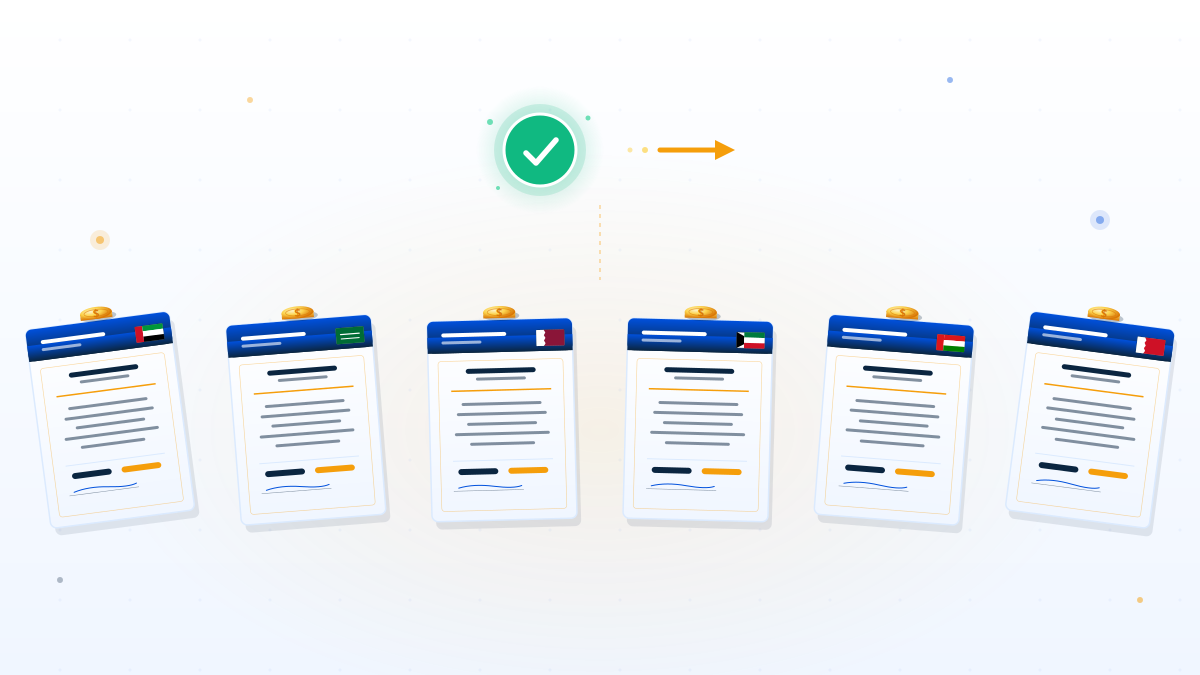
Get Your End of Service Gratuity GCC Liability Right Before It Catches You
End of service gratuity GCC liability is the most underestimated line item in Gulf payroll. Indeed, it compounds quietly. It scales with tenure. And it lands as a lump-sum cheque at the worst possible moment — when an employee is already on their way out. Therefore, the smartest move is to accrue it monthly, country by country, on the right salary base, under the right formula. That way you’re never surprised, and you never end up with a labour complaint over a late Article 53 payout.
💼 🚀 Want clean GCC EOSB handling on autopilot? Masdar EOR runs end-of-service accruals, calculations, and payouts across all six Gulf countries through six locally-registered entities — UAE, Saudi Arabia, Qatar, Kuwait, Oman, and Bahrain. Monthly statements. Year-end summaries. One compliance team. Zero hidden fees. 👉 Get my GCC EOR quote →
More guides in: Gratuity & End of Service